


Abruzzo is a land waiting to be discovered, which makes landscape variety its strong point. In particular, one of the most interesting elements offered by the wonderful territory of Abruzzo is the charming ancient villages, often fortified, that characterize especially the scenic mountain and foothill areas of the four provinces. From the hills bordering the Adriatic to the majestic mountains of the Gran Sasso and Maiella, Abruzzo is one of the most important regions in Italy both in terms of the number and quality and state of preservation of its historic villages. Immersed in the green mountains, or on the Trabocchi coast, let’s explore the 10 Most Beautiful Villages of Abruzzo.
ABBATEGGIO
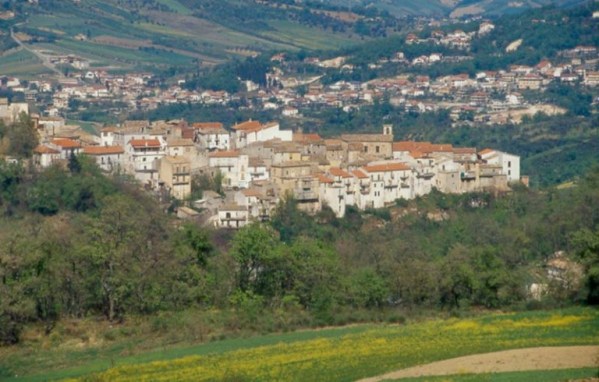
A small town located in the Majella National Park, about 40 km from our facility, Abbateggio is a delightful hamlet nestled at an altitude of 457 meters on a hill from which one can enjoy an extraordinary panoramic view of the Gran Sasso and Morrone mountains. Its origins date back to the years immediately following the founding of the Monastery of San Clemente a Casauria by Emperor Ludwig II in 866. The small town consists of an ancient core of small houses made of white local stone and a more recent part dating back to the early 1900s. The town’s most important monument is the Sanctuary of Our Lady of Elcina, which stands on a rocky hill a short distance from the historic center of the town and is of considerable historical-artistic-religious value to the entire valley. Also worth a visit are: the Church of San Lorenzo Martire; the small Church of the Madonna del Carmine; and the important archaeological site of Valle Giumentina, one of the main vestiges of the Paleolithic period in Abruzzo.
CARAMANICO TERME
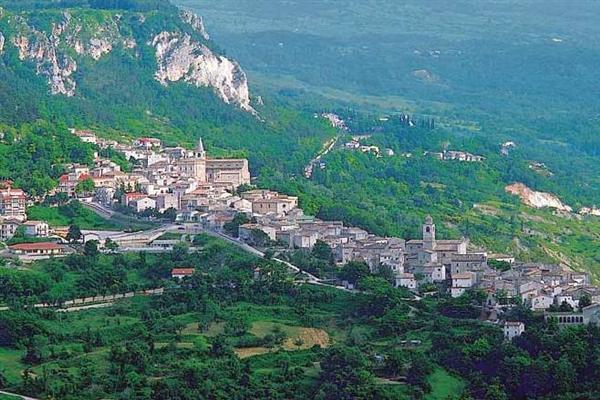
A quaint and lively village in the province of Pescara, Caramanico Terme is a place where history and nature combine to perfection. Set on a rocky outcrop at 650 meters above sea level in the heart of Majella National Park, near the splendid Valle dell’Orfento Nature Reserve, Caramanico is endowed with sulfur and oligomineral waters whose therapeutic properties have been known since the 16th century. The origins of the ancient village can be traced back to the early Middle Ages, to the time of Lombard settlement in the region. Of particular interest is its historic center, characterized by narrow alleys overlooked by houses with graceful stone portals. The most important monument is the Church of S. Maria Maggiore, the town’s main religious building, inside which there are remarkable Baroque altars, valuable 15th-century paintings and statues, and a gilded copper monstrance by Nicola da Guardiagrele. Other monuments and places of interest in Caramanico Terme include: the Church of St. Thomas the Apostle; the Church of St. Nicholas of Bari; and the “P. Barrasso” Archaeological Nature Museum, a visitor center of the Majella National Park and Environmental Education Center of the Abruzzo Region.
CASTLES
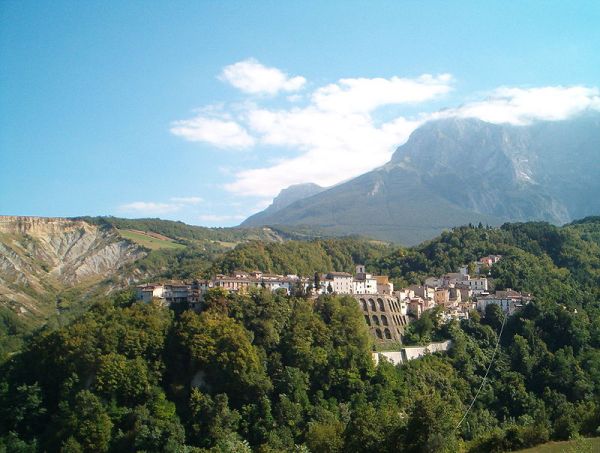
Positioned at the foot of Mount Camicia in the Gran Sasso and Monti della Laga National Park, the village of Castelli is a quaint hamlet famous for its production of painted majolica, a tradition that dates back to the early Renaissance. To the school of the Grue, Gentile and Cappelletti families are owed objects of extraordinary beauty. Particularly famous is the Church of San Donato, defined in 1963 by Carlo Levi as “the Sistine Chapel of Italian majolica” because of the marvelous ceiling made entirely of decorated majolica tiles created between 1615 and 1617 with the choral participation of all the castellan ceramists. Other things to see include: the Church of St. John the Baptist, which houses a ceramic altarpiece made in 1647 by Federico Grue; and the Museum of Ceramics housed in the Franciscan convent of the Friars Minor Observant, where it is possible to admire valuable majolica.
ATRI
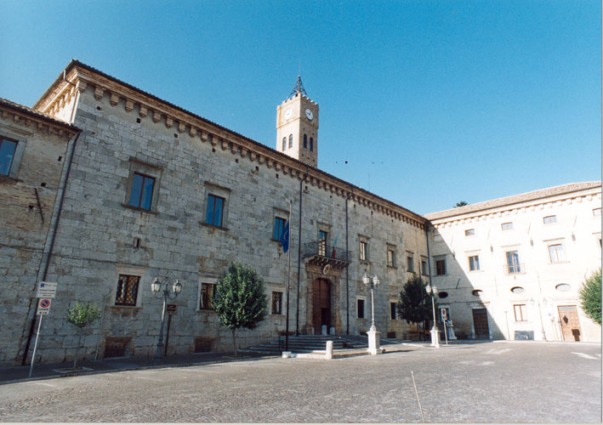
A fascinating city of art close to the Teramo coast and a few kilometers from Silvi Marina, Atri represents one of the most historically and artistically significant centers in central and southern Italy and beyond. Its origins are very ancient, its history supposedly beginning in the 10th century B.C. with the migration of the Illyrians, who originally inhabited these lands. And it is in the center of the town that the charm of this long history continues to reveal its evocative power to this day through monuments, historic buildings, churches and striking views. Atri’s most important monument and one of the best known in the whole of Abruzzo is the Cathedral of Santa Maria Assunta, a magnificent Romanesque-Gothic building embellished with a marvelous cycle of frescoes by the 15th-century Abruzzese artist Andrea Delitio. Also worth a visit are the Church of Santa Reparata, the Church of Sant’Agostino, the Church of San Francesco, the submerged ruins of the ancient port of Atri near the Cerrano Tower, the Ducal Palace of the Acquaviva family, and the Capitular Museum attached to the cathedral. In terms of landscape, the Atrian hills fascinate for the spectacular presence of the Calanchi, extraordinary geological formations originated by the erosion of clay soil
CIVITELLA DEL TRONTO
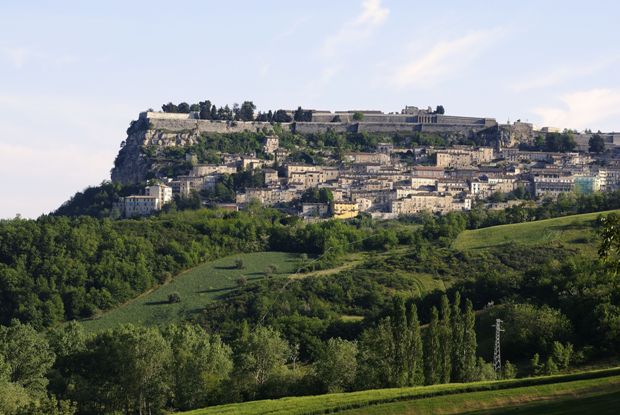
In the province of Teramo, in the far north of the Abruzzo region, lies the small town of Civitella del Tronto, a delightful hamlet famous not only for its local handicrafts but also for being a paradise of flavors; in fact, among its typical products are salami, cheese, potatoes, legumes, oil and cookies, as well as black truffles, mushrooms and wild boar. Although the earliest evidence of Civitella dates back to the Neolithic and Upper Paleolithic periods, the village as we can admire it today dates back to the early medieval period. Civitella’s symbolic monument is the Bourbon Fortress, an extraordinary work of military engineering, among the largest and most majestic in Europe, characterized by an elliptical shape with an extension of 25,000 square meters and a length of more than 500 m. Enviable for its panoramic position, the fortress seduces with its three splendid squares of arms, ramparts, walkways and inside, the Museum that still tells its story. In addition to the fortress, also noteworthy are: the Collegiate Church of San Lorenzo; the Church of San Francesco; the small Church of Santa Maria degli Angeli; and the Ruetta, the narrowest street in Italy.
NAVELLI
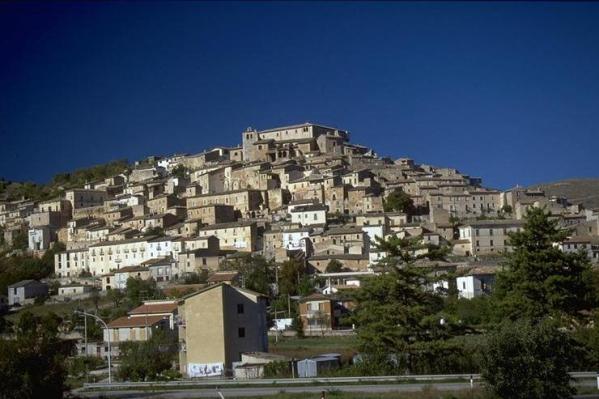
Located about 700 meters above sea level, on the vast plateau to which it gives its name, Navelli is an ancient village famous throughout the world for its precious and unique “red gold,” saffron, which every year captures the astonished gazes of so many visitors during the months of October and November, the period during which the Piana di Navelli witnesses the miracle of purple flowers. Its origins are ancient; in fact, the first settlements in the area seem to date back to around the 6th century B.C., when the vicus Incerulae was located in the area below the present town. Among its monuments and places of interest, the following are worth mentioning: the Baronial Palace Santucci, an imposing 17th-century building erected on the ruins of the ancient medieval fortress, which has numerous decorative elements, especially in the courtyard, adorned with a beautiful central well and wide staircases serving the upper floors; the Church of St. Sebastian, which preserves its Renaissance portal and, inside, a processional cross from the 14th century; and the Church of St. Mary in Cerulis, where one can admire splendid apsidal frescoes.
PENS
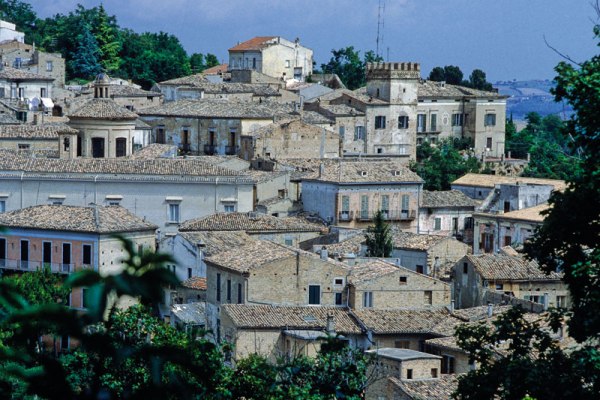
An enchanting village in the province of Pescara, Penne spreads over four hills between the valleys of the Tavo and Fino rivers, surrounded by verdant vegetation, rich in olive groves and water. Its origins are unknown and its history begins with the arrival of the Vestini people in the territory of Abruzzo, which is why it was called “Pinna Vestinorum” by Strabo. An ancient and magnificent city of art, Penne is called the “city of bricks,” for its buildings almost entirely made of terracotta, also used to pave the narrow and steep streets of the ancient town. A few kilometers from the historic center is the “Lake Penne” Nature Reserve, which has an interesting Natural History Museum. The landmark monument is the Cathedral, whose existence is known as early as 868, when the remains of St. Maximus were transferred there. The church has a terracotta facade, as do the 15th-century interior pillars and 14th-century bell tower. In addition to the cathedral, the scenic Porta San Francesco, the Church of the Annunziata with its Baroque terracotta facade, the 16th-century Palazzo Scorpione, and the Collegiate Church of St. John the Evangelist deserve special mention.
PIETRACAMELA
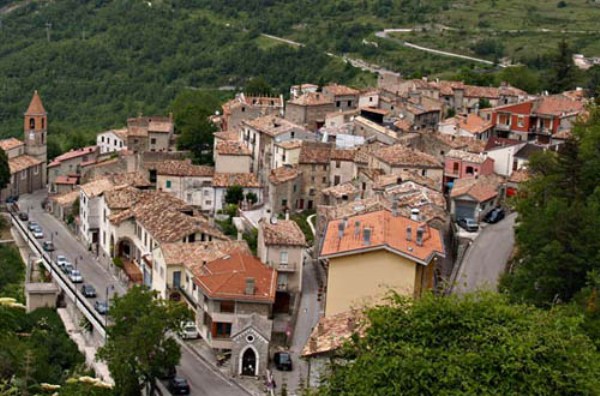
Another beautiful village in Abruzzo is Pietracamela, a small town in the province of Teramo set on the slopes of Gran Sasso that, with the ski settlement of Prati di Tivo above the village, boasts more than 6 kilometers of downhill and cross-country skiing trails. Of very ancient, if uncertain, origins, Pietracamela has a magnificent historic center, made unique by the characteristic stone houses, the narrow paved alleys that run through the town and the charming Romanesque-style churches, rich in artistic-religious treasures. Worth a visit are: the Church of St. John the Baptist, whose primitive construction, elevated in stone ashlars, dates back to the 15th century; the Church of St. Rocco, built in 1530 on the occasion of the plague that struck the township; the Church of St. Leucio, dedicated to the patron saint of Pietracamela, the first bishop of the Diocese of Brindisi; the Museum of People and Ancient Crafts, housed within the rooms of the Town Hall building; andthe Casa de Li Signuritte, with mullioned windows with two lights from the 15th century and a majolica crucifix.
PRETORO
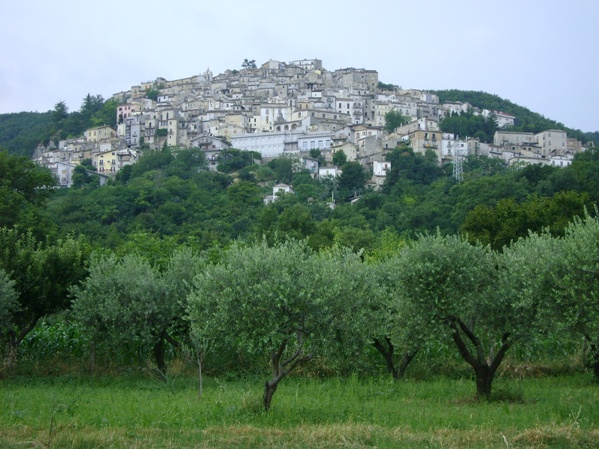
About 50 km from our hotel is Pretoro, a characteristic village in the province of Chieti perched on the slopes of the Maiella withhouses leaning against each other along narrow alleys connected by narrow, winding stairs. The town, which dominates an area of incomparable natural beauty, is located within the Majella National Park, which offers hiking enthusiasts the opportunity to take interesting routes to discover the local flora and fauna. Moreover, in its territory there is the Apennine Wolf Wildlife Area. Pretoro, whose origins can be traced back to the Italic period (6th-5th centuries B.C.), boasts a long period of history, traditions and culture, and is home to many buildings and monuments of great artistic importance. The main monuments are three religious buildings: the Church of St. Andrew the Apostle, whose style is the result of neoclassical reconstruction with Baroque elements; the Church of St. Nicholas, better known as the Church of St. Dominic, to whom the Lu Lope celebrations and the archaic Serpari celebrations are dedicated; and the Hermitage of the Madonna della Mazza, dating back to the 13th-14th centuries.
SAN GIOVANNI ROCK
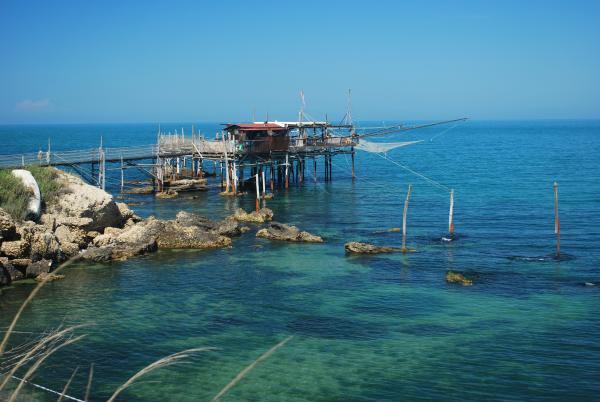
A small town in the province of Chieti, Rocca San Giovanni stands on a rocky hill overlooking the Costa dei Trabocchi, a splendid stretch of Adriatic coastline marked by the spread of trabocco, famous throughout Italy for its naturalistic beauty and heterogeneity. A City of Wine, Rocca San Giovanni boasts two wineries that produce Montepulciano d’Abruzzo and Trebbiano d’Abruzzo DOC wines, with an emphasis on whites. Founded in the 11th century by Oderisio I, the town has interesting 19th-century buildings, such as Palazzo Colizzi, almost all of which have large interior gardens. Also worth a visit: the Church of San Matteo, in Romanesque style and still with its original Gothic arches; the Town Hall, built in the late 1860s and 1870s and restored in 1926; and the Torrione dei Filippini, part of the 13th-century town wall, of which only a section remains.
Get a quote now, with no obligation!